Kate Anna Arriëns was born on 6 July 1906 in Amsterdam, the daughter of Pieter Albert Arriëns, a shipping company director, and Catharina Hillegonda Maingay. She studied French at the University of Amsterdam, where she met law student Jan ter Horst. They married in 1930 and had six children.
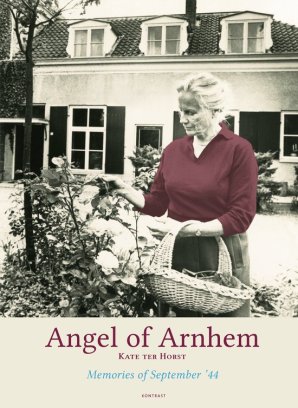
After moving to Oosterbeek in 1941, the family lived in a former rectory. On 18 September 1944, during the Battle of Arnhem, their home was taken over by British soldiers as a Red Cross aid station. Over the next days, Kate sheltered and cared for around 300 wounded soldiers, reading Psalm 91 to the dying and sharing all her household supplies.
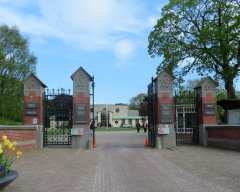
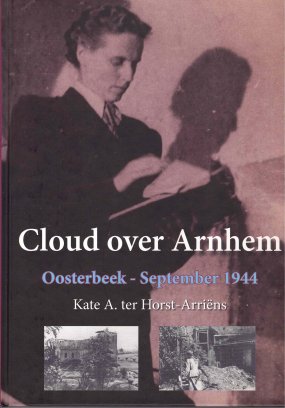
Following the battle, the Ter Horsts were evacuated but returned to Oosterbeek after the war. They were active in commemorating the battle, helping establish the Airborne Cemetery and war memorial. Kate’s wartime diary was published in 1946 (Niet in Vain) and in English in 1959 (Cloud over Arnhem). She appeared as herself in the 1946 film Theirs is the Glory, and her story was later depicted in A Bridge Too Far (1977).
The Ter Horsts suffered personal tragedy in November 1947 when their 13-year-old son Peik was killed by a leftover landmine. Kate continued her community work, influenced by anthroposophy, and wrote a book in 1980 (Pilgrim Paths along Good and Evil).
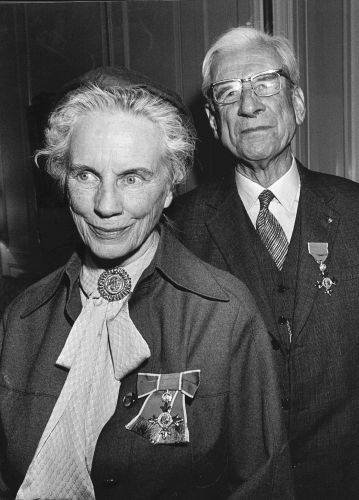
In 1980, she was awarded the King’s Medal for Courage in the Cause of Freedom and, along with her husband, made a Member of the British Empire. Kate died instantly on 21 February 1992 after being struck by a car outside her home in Oosterbeek; Jan survived and died in 2003. They are buried together at the Oosterbeek Cemetery.