Theodoor “Theo” van Gogh was a young Dutch economics student who became involved in the resistance during the Second World War. He was born in Amsterdam in 1920 and grew up in Laren in a comfortable middle-class family. His father, Vincent Willem van Gogh, worked as an engineer and adviser, and his mother came from the well-known Wibaut family. Theo was named after his grandfather, the brother of painter Vincent van Gogh.
After finishing the HBS in Hilversum, he went to study economics at the University of Amsterdam. There he joined the student corps A.S.C. and became active in the M.A.R.N.I.X. student society. When the occupation authorities forced students and university staff to sign the loyalty declaration in 1943, Theo joined other students in protesting against it.
He took on small but risky tasks in the resistance. As a courier, he helped with delivering materials, including radio equipment. On 25 May 1943, he was arrested during a raid on his student room at the Amstel. The Germans were unaware of his resistance work; he was held only because he refused the declaration. He spent time in the Amsterdam prison and later in the Vught camp until his father managed to secure his release by paying 500 guilders.
After this, Theo continued his underground activities. He worked with groups like LO-Laren and Natura, helping students, Jews, and fellow resistance members who needed to go into hiding. He provided ration cards, forged identity papers, food, and safe addresses. His own room on the Weteringschans also served as a temporary hiding place.
On 6 June 1944 he was arrested again, this time while transporting radio tubes for the resistance. His identity papers were not in order. He refused to say anything about his activities and was taken to the detention camp at Amersfoort, where he stayed until mid-July. Once again, his father bought his freedom, now for 800 guilders. Theo then stayed at his father’s office building on the Herengracht. From there he helped support the underground newspapers Het Parool, Ons Volk and Den Vaderlant Ghetrouwe.
In early March 1945 things took a fatal turn. After the Germans intercepted a bread transport, the Sicherheitspolizei raided the Weteringschans apartment shared by Theo and his friend Johan Bais. Their close friend Gijs Gorter was also arrested. Shortly afterward, the Germans carried out large-scale reprisals for a failed attack on SS-General Hanns Albin Rauter. On 8 March 1945, more than 200 prisoners were executed across the country.
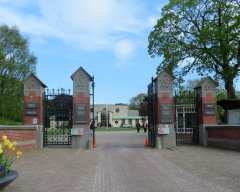
Theo van Gogh, Bais, and Gorter were among the 53 prisoners shot that day at the Rozenoord execution site in Amsterdam. He was only 24 years old. After the war, Theo was reburied with honor at the Eerebegraafplaats Bloemendaal in Overveen. Years later, his brother Johan named his son after him—the film director and writer Theo van Gogh.