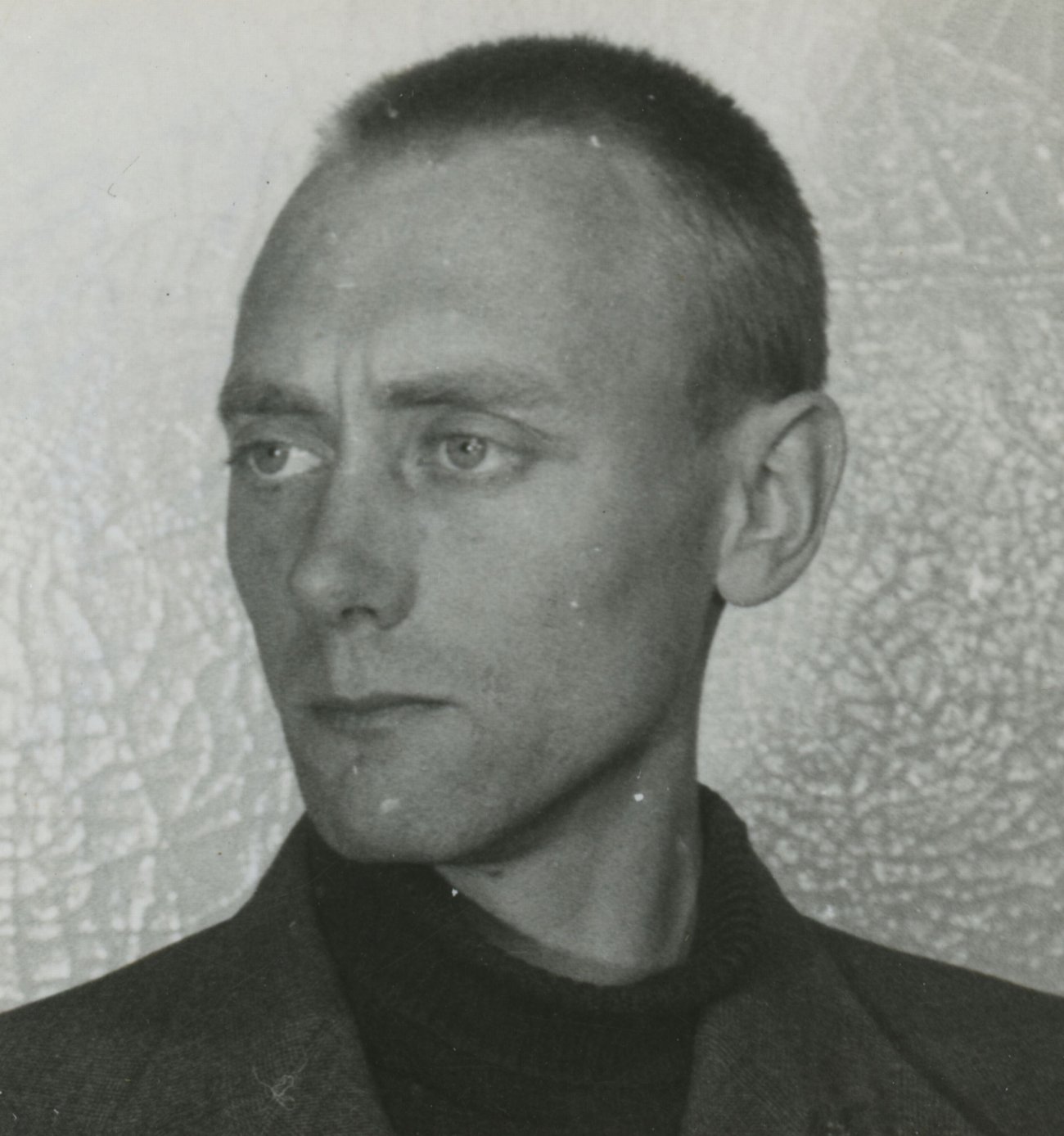
Willem Meindert Willemsen was born on 19 November 1915 in Amsterdam. He later became one of the most notorious collaborators in the Netherlands during the German occupation. His own explanation for his later actions was that he had developed anti-Jewish views after what he described as “bad experiences” in his father’s bicycle shop. It is hard to say whether this was true or just an excuse — but it shaped his story during the war.
From Haarlem to the State Police
In 1943, Willemsen lived at Zaanenstraat 63 in Haarlem. He worked there as a wachtmeester with the State Police’s intelligence unit at Nassauplein. This unit played an active role in tracking down and arresting Jewish people who were in hiding. Together with his colleague Pieter Johan Faber, Willemsen became one of the most feared “Jodenjagers” (Jew hunters) in the country.
They were not only active in Haarlem. Their arrests led from one person to the next. The pair traveled across the Netherlands, following every lead. One of the biggest raids took place on 30 September 1943 in Laren, where they arrested 29 Jewish people at the pension of Ies Bleekrode — only two escaped.
Willemsen also worked against the resistance. He and Faber helped roll up the Vrij Nederland resistance group in Haarlem in late 1943. Their actions caused many arrests and deaths.
Because of his brutality, Willemsen became a high-priority target for the resistance. On 25 October 1944, famous resistance fighter Hannie Schaft, together with Cor Rusman, attempted to assassinate him. The attack failed, and Willemsen survived.
Trial and punishment after the war
After the liberation, Willemsen was arrested and brought to justice. On 22 September 1947, the Special Court in Amsterdam sentenced him to death. When he stood trial again in January 1948, he caused a scene by jumping over the table and grabbing the judge, Mr. M. van Vugt, by the throat — but he was quickly restrained.
His lawyers appealed. A psychiatric examination showed he was fully responsible for his actions. The death sentence was confirmed on 13 October 1948. The court stated he had arrested more than 100 people, at least 56 of whom were killed.
However, in April 1949, Queen Juliana granted him clemency. His sentence was reduced to life imprisonment.
Disappearance and unknown death
What happened after that remains unclear. Records suggest that Willemsen may have been released later, and he is said to have lived in Hamburg afterward. His exact date of death is unknown.