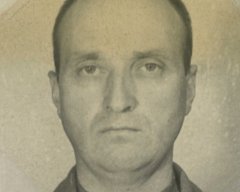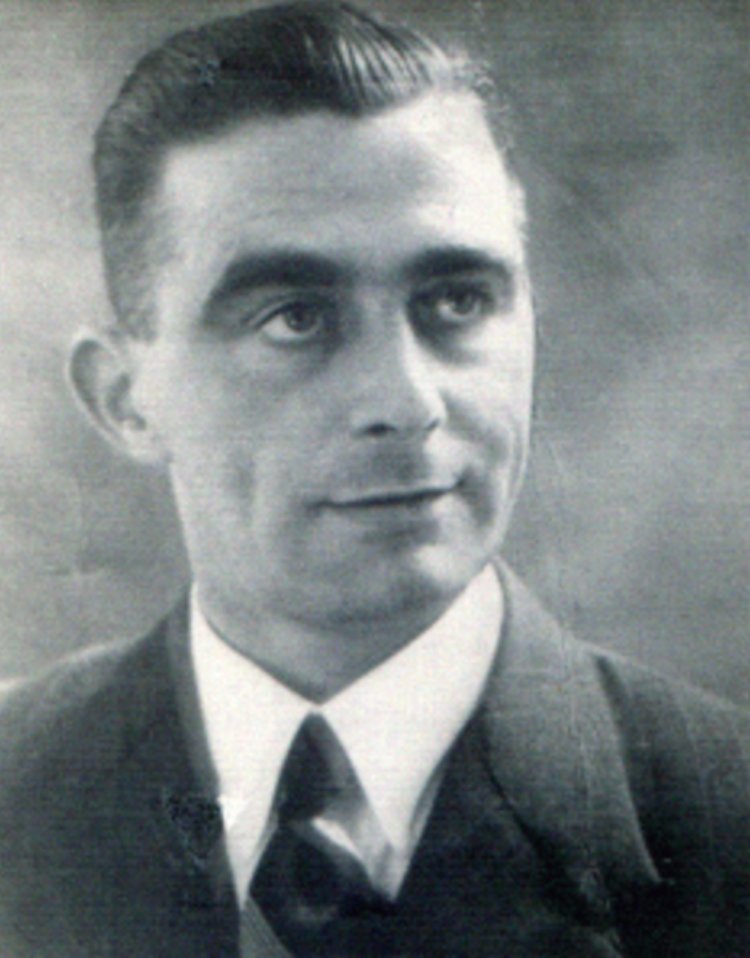
Casper Naber was a Dutch resistance fighter during the Second World War. Before the war, he owned a hardware and tool shop on the Gelkingestraat in Groningen. In 1943, resistance member Henk Deinum approached Naber to use his shop as a cover for a secret radio post, aimed at transmitting weather reports and other intelligence to the Dutch government-in-exile in London. Naber agreed and recruited S.P. de Boer, a teacher at the local nautical school, to help find radio operators and obtain the necessary equipment.
The radio post operated under the codename “Beatrix-Met,” or Beatrix. Aad de Roode instructed De Boer and the operators and activated the transmitter on 12 December 1943. Naber was responsible for encoding and decoding messages from the intelligence group led by Bob Houwen and Theo Sluis. He also assisted Jewish people in finding hiding places.
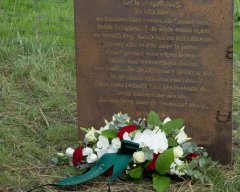
On 10 November 1944, Naber’s location was betrayed by an agent forced to cooperate with the Sicherheitsdienst (SD). He was arrested and imprisoned in the Scholtenhuis, the SD’s headquarters on the Grote Markt in Groningen. After initial interrogations, Naber feared he might break under further questioning and inadvertently reveal the identities of his fellow resistance members. On 11 November 1944, he took his own life by jumping from an attic window of the Scholtenhuis at the age of 38. He was buried in the Roman Catholic Cemetery in Groningen. Both his gravestone and a nearby resistance monument spell his first name as Caspar rather than Casper.
For his bravery and resistance work, Naber was posthumously awarded the Bronze Cross. In 1975, a covered shopping passage near the former site of the Scholtenhuis was named the Naberpassage in his honor. When the passage was later removed during redevelopment of the Grote Markt, the street connecting the Grote Markt and Nieuwe Markt was named the Naberstraat. The street sign was unveiled on 13 September 2021 by Naber’s granddaughter.