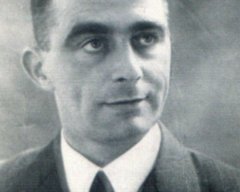
Popke “Pop” Dijkema was a Groninger resistance hero remembered for his decisive and courageous act during the final days of the Second World War. On 16 April 1945, with the city of Groningen nearly liberated, Dijkema risked his life to help close the bridge at the Oostersluis, enabling Canadian forces to continue their advance toward Delfzijl.
Born in Garmerwolde on 17 July 1890, Dijkema worked for the Provincial Water Authority, where he was responsible for the maintenance of bridges and sluices. His technical knowledge would prove vital during the liberation battles. On that April morning, Dijkema was visiting family in the Oosterparkwijk when he learned that the Canadians were unable to proceed, the Germans had opened both bridges of the Oostersluis and taken up fortified positions on the opposite bank at Oosterhoogebrug.
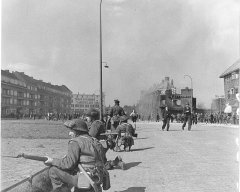
Recognizing the importance of closing the bridge, Dijkema volunteered his assistance. Together with his brother Jacob Jan and nephew Jan, and under the protection of a Sherman tank, he approached the sluis. Crawling under the bridge and across exposed ground while under heavy German fire, the three men reached the machine room. There, using only their hands, they managed to turn the gears and slowly lower the bridge back into place.
As they attempted to open the gates, Dijkema was struck in the arm by a bullet and took cover behind a wall. His brother and nephew escaped by diving into the water. Canadian soldier Roy Walter Coffin, who had stood upright to provide covering fire during the operation, was fatally shot. His bravery is remembered alongside that of the Dijkema family.
Thanks to their actions, the Canadians were able to breach the final German defenses, pushing on toward Delfzijl and securing the complete liberation of the northern Netherlands.
Beyond this act of wartime heroism, Pop Dijkema also sheltered several people in hiding during the occupation, further exemplifying his quiet courage and sense of duty. He passed away in Groningen on 24 November 1959 and was buried in Noorddijk cemetery.
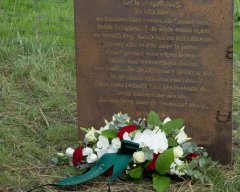
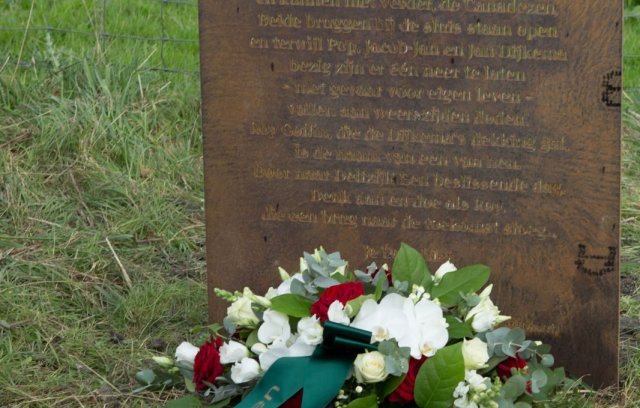
A commemorative plaque, known as Twee Bruggen, honors the bravery of Pop Dijkema, his family, and the Canadian liberators who risked and in some cases gave their lives for freedom.