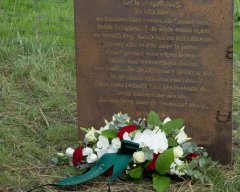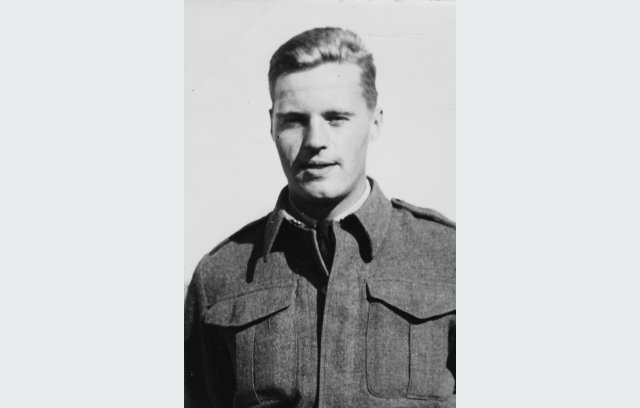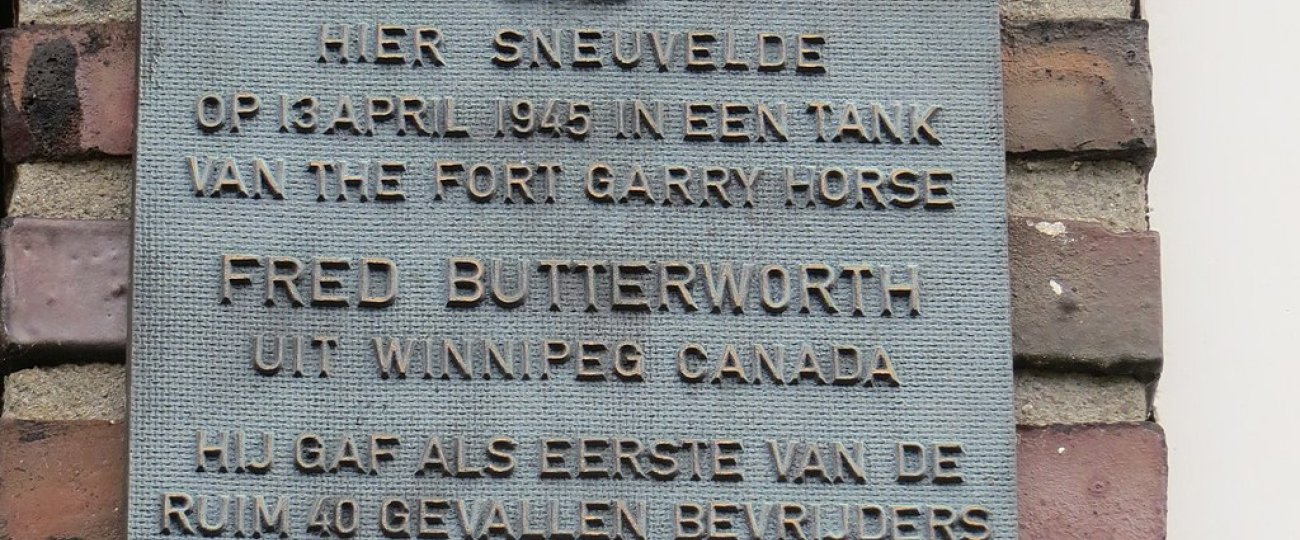
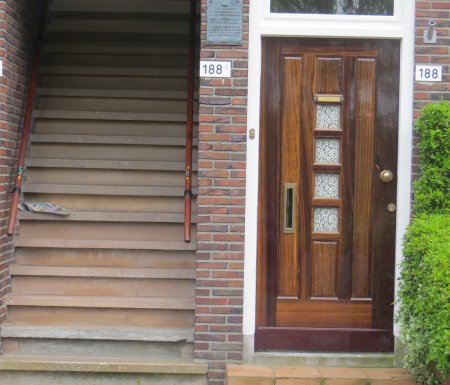
The monument for Fred Butterworth reminds the residents of Groningen of the Canadian soldier who was killed during the liberation of the city.
In early April 1945, the Allies advanced rapidly toward the province of Groningen. The liberation of the province took place in three regions: the border area between Musselkanaal and the Dollard, the city of Groningen, and the 'Delfzijl bridgehead.' A reconnaissance unit of the First Polish Armored Division crossed the provincial border at Musselkanaal on April 11. They then advanced northward toward Winschoten.
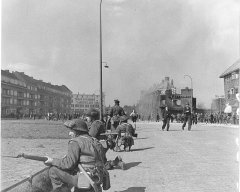
The second Allied advance was directed at the city of Groningen. From April 13, the city was within range of the artillery of the Second Canadian Infantry Division, led by General A.B. Matthews. After three days of fighting, the German resistance was broken. During the battles, 106 civilians lost their lives. A part of the city center of Groningen (particularly around the Grote Markt) was reduced to ashes. This was mainly due to the rapid advance of the Allies, which prevented the occupiers (a total of approximately 6,500 men) from retreating in time to the Rabenhaupt Barracks on Hereweg. This barracks was supposed to serve as the main stronghold of resistance. The final resistance took place at the (former) National Archives on St.-Jansstraat/Singelstraat, where the German surrender occurred.
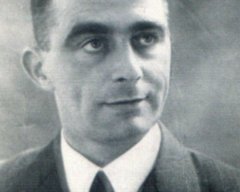
During the battle, 42 Canadians were killed. Fred Butterworth was the first soldier to lose his life during the liberation of Groningen. On April 13, the tank carrying the 23-year-old soldier was hit by enemy fire during a battle with the occupiers on Paterswoldseweg, causing the tank to catch fire.