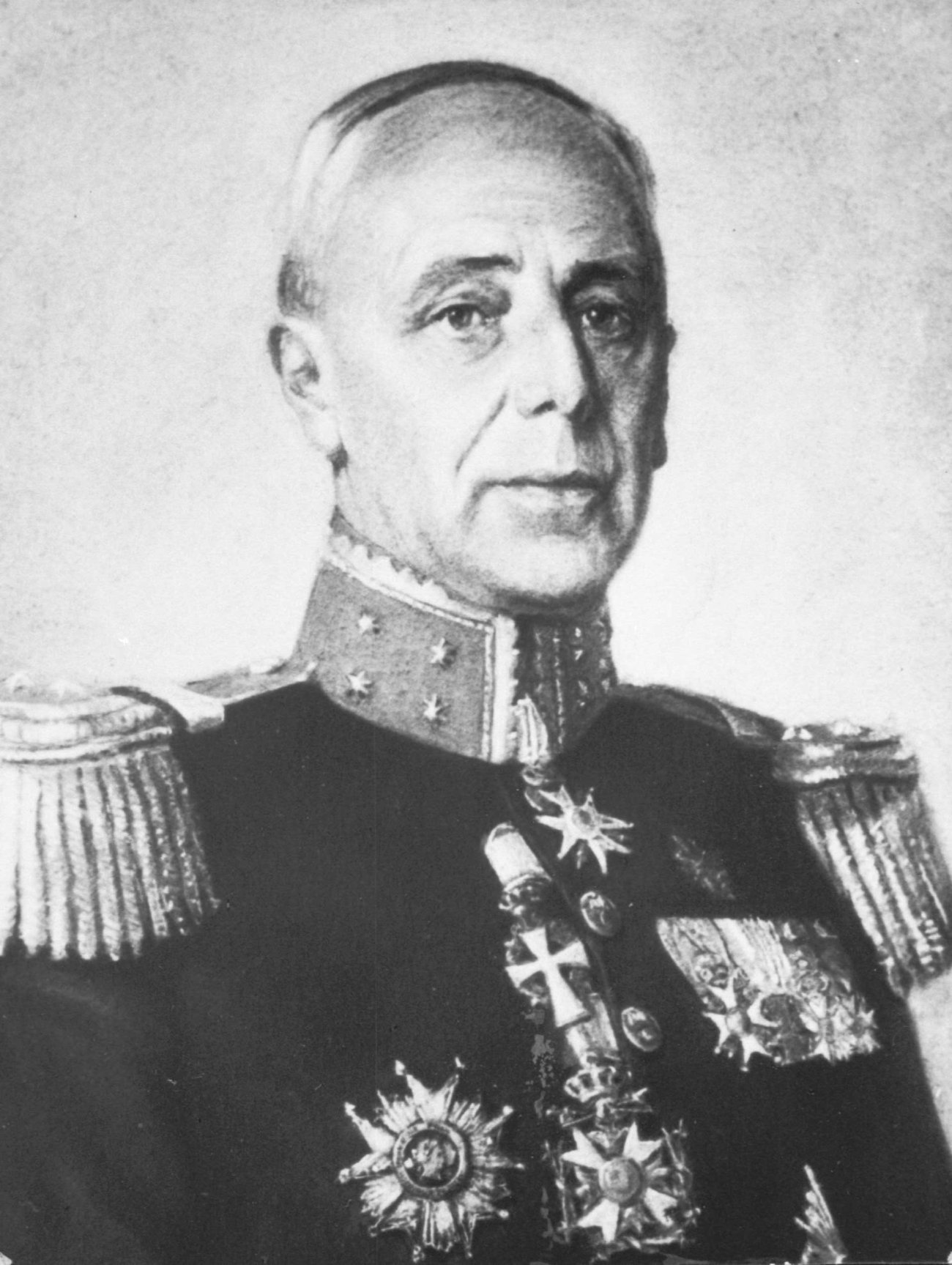
Hendrik Alexander Seyffardt was born in Breda on 1 November 1872. His family name was often written in newspapers as Seyffardt, even though the official spelling in the civil register of The Hague was Seijffardt. He came from a respected military family. His father, August Lodewijk Willem Seijffardt, had been Minister of War in the Van Tienhoven cabinet. Following in his father’s footsteps, Hendrik chose a military career at a young age. At fifteen he entered the Royal Military Academy in Breda, and by 1900 he was teaching there himself.
Through the years he rose steadily in rank, eventually becoming Chief of the General Staff from 1929 to 1934. In that position he also oversaw the Central Intelligence Service (CI). Seyffardt disliked the CI’s close monitoring of NSB members, and he tried to stop this surveillance. His colleague J.W. van Oorschot defended the CI’s methods until Seyffardt finally retired in September 1934.
Moving toward politics
After leaving the army, Seyffardt gave public lectures for the conservative movement Verbond voor Nationaal Herstel. In 1937 he joined the NSB but resigned after only six months. He continued to appear in far-right circles, and in October 1940 he attended a meeting of a fascist group connected to the magazine De Waag.
A new role during the occupation
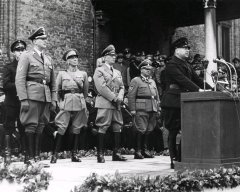
When Germany invaded the Soviet Union in June 1941, new opportunities opened up for Dutch volunteers willing to fight “against Bolshevism.” In July 1941 Reichskommissar Arthur Seyss-Inquart asked Seyffardt—now a retired lieutenant general—to become the public figurehead of the Dutch Legion, a unit that would fight on the Eastern Front as part of the Waffen-SS.
Seyffardt, a strong nationalist and an outspoken anti-communist, agreed. Through newsreels such as Polygoon, he addressed the Dutch public and called for volunteers. But he misunderstood how much control the SS intended to keep. Although he was nominally the commander of the Dutch Volunteer Legion, almost all important decisions were made by the German authorities. His wish for an independent Dutch unit at the Eastern Front never became reality.
By early 1942 he grew frustrated and offered his resignation to Hanns Albin Rauter and Seyss-Inquart, but they persuaded him to stay. Meanwhile, propaganda continued to present him as the military “face” of Dutch collaboration.
Fear of a Mussert government
On 1 February 1943, Anton Mussert announced a so-called shadow cabinet of “Commissioners.” Seyffardt was listed as commissioner for the Volunteer Legion. Many people in the resistance feared that this was the first step toward a full Mussert government, with Seyffardt as Minister of War—something that might even lead to forced military service under German control. This fear made him a major target.
Assassination and consequences
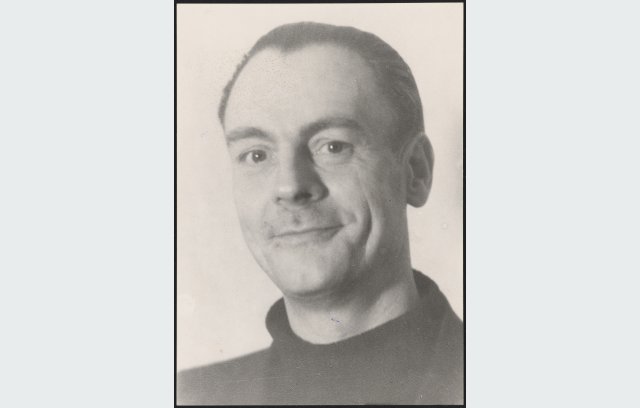
On the evening of 5 February 1943, two members of the resistance group CS-6, Gerrit Willem Kastein and Jan Verleun, knocked on the door of Seyffardt’s home at Van Neckstraat 36 in The Hague. Seyffardt answered the door himself. He was shot and severely wounded. He died the next day, 6 February 1943, at the age of 70.
The German reaction was brutal. His death became one of the triggers for the Silbertanne reprisals: a series of executions of Dutch civilians carried out by SS commandos in 1943 and 1944.
To honor Seyffardt, the Germans later renamed a Dutch volunteer regiment at the Eastern Front the 48th SS Volunteer Panzergrenadier Regiment “General Seyffardt.”
A complicated and controversial figure
Seyffardt’s life is difficult to place in simple terms. Before the war he was a well-respected officer with a long and serious career. During the occupation he allowed himself to become a collaborator and a propaganda figure, partly driven by his anti-communist views and partly by his own misjudgment of German intentions.
For me, he represents a type of person we often see in wartime: someone with a solid background who nevertheless chooses a path that leads to deep controversy and, in the end, tragic consequences—both for himself and for others.