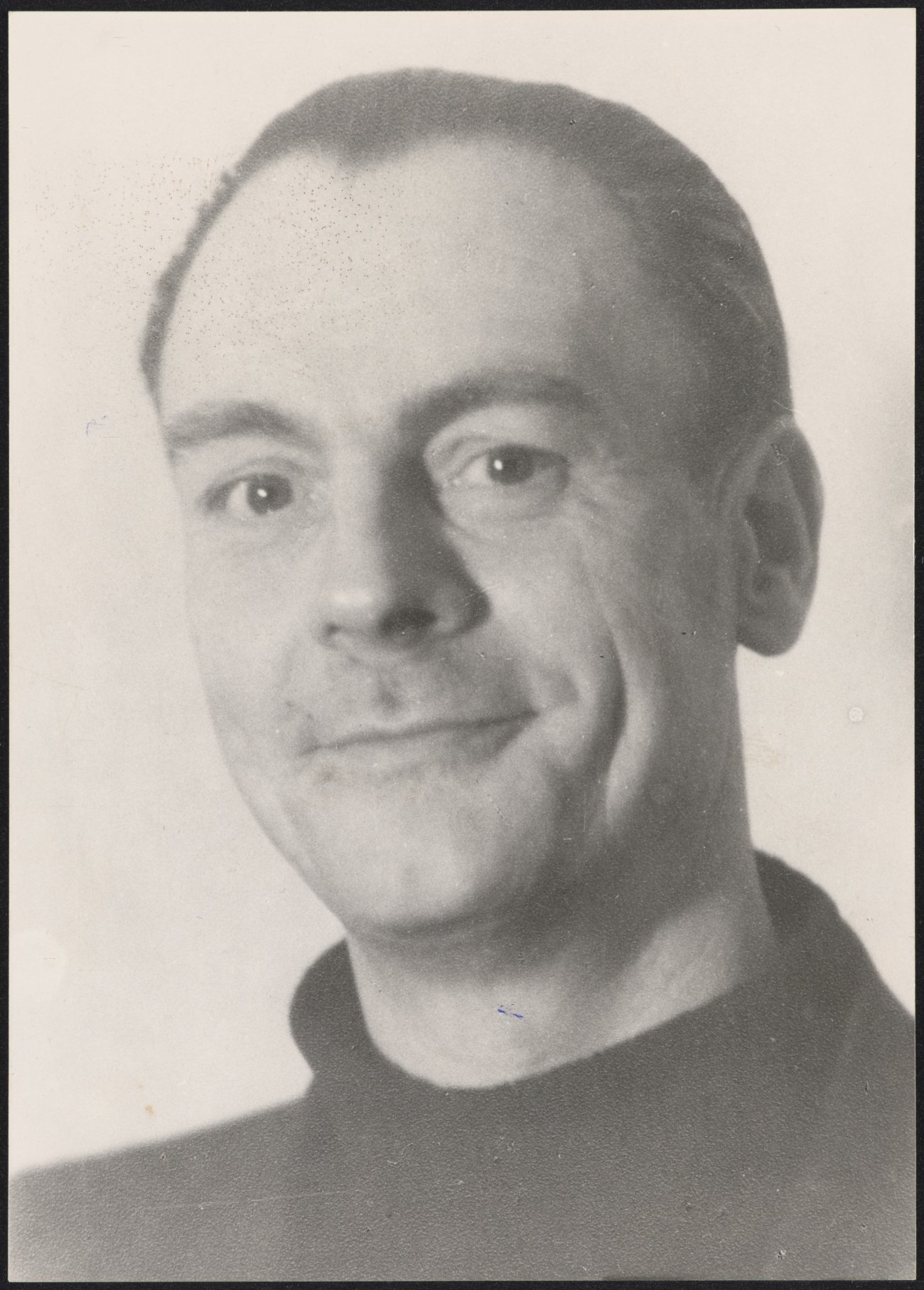
A Dutch collaborator known for his brutality
Maarten Kuiper was born in The Hague on 30 November 1898. Before the war he worked as a police officer, but his life took a dark turn when he joined the NSB and later the SS. During the German occupation he became one of the most feared Dutch collaborators, involved in serious war crimes.
During the Second World War Kuiper worked for the German Security Service, the Sicherheitsdienst (SD). In this role he helped track down Jewish people who were in hiding. For each arrest he received a payment, something that shows how little hesitation he had in carrying out the occupier’s orders. He also carried out house searches and confiscated radios, which were banned by the Germans.
Kuiper quickly gained a reputation for cruelty. His interrogations were known for harsh and violent methods. He often worked together with German SD officers such as Emil Rühl, Friedrich Viebahn, and Ernst Wehner. This small group was responsible for numerous arrests, torture sessions, and executions.
Silbertanne and other killings
Kuiper was involved in Operation Silbertanne, a series of targeted murders carried out by Dutch SS men as reprisals for resistance actions. One of the victims was the writer A.M. de Jong, murdered in 1943. Kuiper took part in these operations without hesitation.
On the morning of 15 July 1944 he helped arrest the badly wounded resistance fighter Hilbert van Dijk, who had failed in a raid at the Weteringschans prison. Van Dijk was executed the next day along with several others, including resistance leader Johannes Post. Kuiper and the notorious SD officer Willy Lages were present at the executions.
Misattributed involvement at the Anne Frank arrest
Some modern writers have tried to link Kuiper to the arrest of the people hiding in the Secret Annex on 4 August 1944. British author Carol Ann Lee suggested that he helped in the raid. However, this claim is not supported by reliable evidence. The idea that Kuiper was present during the arrest of Anne Frank, her family, and their helpers is considered incorrect by historians.
The execution of Hannie Schaft
One of Kuiper’s last actions for the SD was the execution of the well-known resistance hero Hannie Schaft. On 17 April 1945, just weeks before the liberation, Kuiper carried out her killing. This act added even more weight to his already long list of crimes.
Trial and execution after the war
After the liberation, Kuiper was arrested and put on trial for war crimes and collaboration. Because of the severity of his actions—torture, participation in executions, and a leading role in the persecution of Jews—he was sentenced to death.
On 30 August 1948 his sentence was carried out at Fort Bijlmer in the Netherlands. Kuiper died at age 49, leaving behind a legacy marked entirely by betrayal, cruelty, and violence.