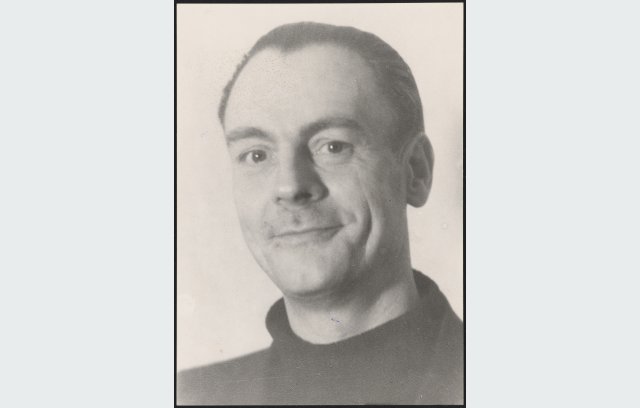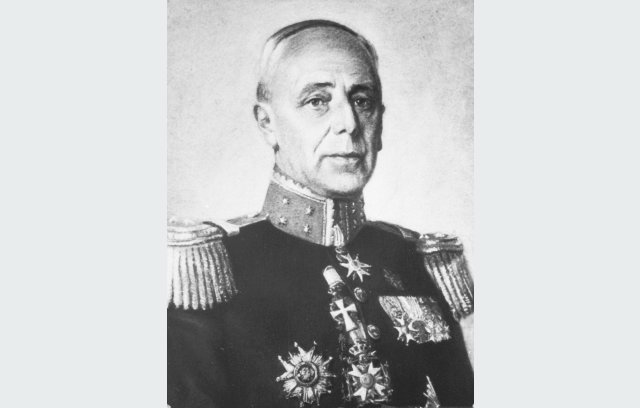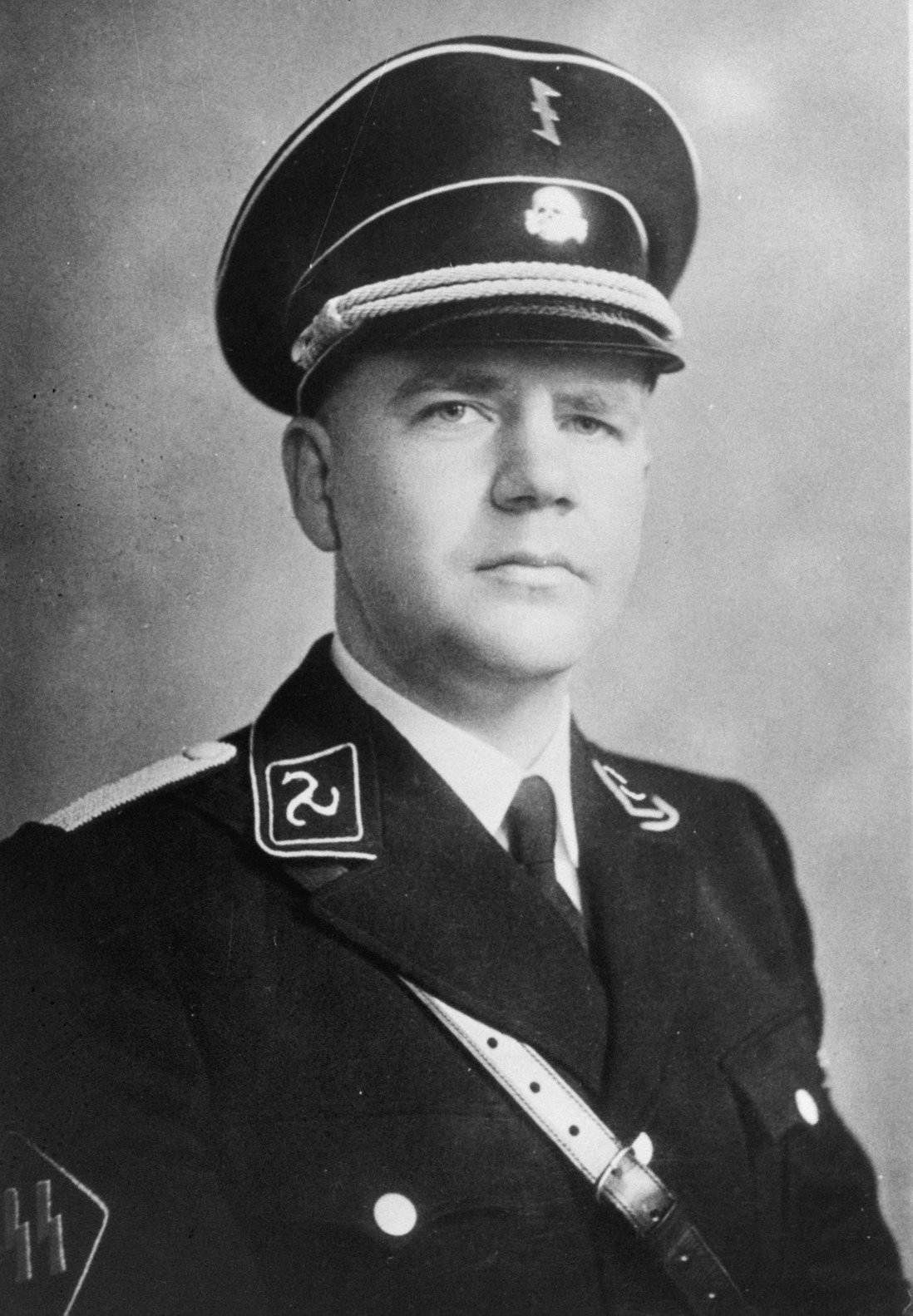
Johannes Hendrik “Henk” Feldmeijer was born in Assen on 30 November 1910 to Egbert Feldmeijer and Antje Wolthers. His family name originally appeared as Veldmeijer, but in 1915 it was officially changed to Feldmeijer. He usually went by his middle name, Henk. At school he stood out as a strong student and graduated in 1928 with top marks in every subject. He then began studying mathematics and physics, although his studies were interrupted in 1931 when he had to perform national service.
During this period he met a member of the newly founded Stormtroopers of the National Socialist Movement (NSB). The NSB, established in 1931, presented itself as a political movement inspired by German National Socialism. It rejected democracy and later became one of the leading collaborationist groups during the German occupation. Feldmeijer was deeply impressed by its ideas and joined in 1932 as member number 479. Because he joined early, he had direct access to the party leader, Anton Mussert.
In the early 1930s Feldmeijer travelled around Groningen and other areas giving speeches about the need for strong leadership and against democratic institutions. His speaking skills were quickly noticed, and he received a paid position in the NSB propaganda department. He visited Nazi Germany several times and met members of the SS; he also travelled to Scandinavia and Mussolini’s Italy. After failing his exams in 1935 he stopped his university studies altogether and became a full-time NSB employee in Utrecht. That same year he was dismissed from his reserve-officer position in the army because of his NSB membership.
Within the NSB he identified strongly with the völkisch wing, a group that emphasized Germanic heritage, racial theory, and antisemitism. Leading figures in this circle included Meinoud Rost van Tonningen. Feldmeijer also had secret contacts with the German SS that his NSB superiors did not fully know about. The völkisch faction pushed the NSB further toward radical ideas and encouraged historical and cultural research meant to show that Dutch identity was fundamentally Germanic.
In 1937 he became an active member of Der Vaderen Erfdeel (“Heritage of our Forefathers”), an organization later renamed Volksche Werkgemeenschap. This group carried out research to support the völkisch worldview. Feldmeijer’s fascination with SS ideology only deepened, but he had to hide these connections because Mussert did not want the NSB to be overshadowed by the German SS. That same year Feldmeijer clashed with Mussert and was removed from the Utrecht headquarters, after which he became district leader of Salland.
In August 1939, Rost van Tonningen appointed him commander of the Mussert Guards, a paramilitary unit modeled on the German SS. Feldmeijer made several trips to Berlin in 1939 to advise the Germans on Dutch-language broadcasts for Radio Bremen. On 3 May 1940 the Dutch government arrested him as a security measure and imprisoned him at Fort Ooltgensplaat together with Rost van Tonningen. He was later moved via Belgium to France and eventually freed by German troops at Calais on 30 May 1940. He returned to The Hague on 2 June.
Soon after, he was introduced to Heinrich Himmler and Hanns Albin Rauter. Rauter, head of the German police in the occupied Netherlands, was impressed by Feldmeijer’s energy and loyalty. Feldmeijer was then tasked with forming and commanding the Nederlandsche SS. Mussert opposed the creation of this Dutch SS unit, but German pressure forced him to agree. Membership peaked at around 4,000 in late 1942. In theory it fell under Mussert, but in practice Feldmeijer answered directly to Himmler and Rauter.
Feldmeijer encouraged members of the Dutch SS to assist in the German war effort and twice served at the front himself. In April–May 1941 he served as a gunner with the Leibstandarte Adolf Hitler in Yugoslavia and Greece. From June 1942 to March 1943 he served in Southern Russia as a flak commander with SS-Division Wiking. He received the Iron Cross Second Class and other decorations. By 1944 he held the rank of SS-Standartenführer.
Inside the NSB, Feldmeijer faced frequent conflict because of his strong alignment with the German SS. While Mussert still imagined some form of Dutch autonomy within a German-led Europe, Feldmeijer and his SS contacts pushed for full integration of the Netherlands into a Greater German Reich. By 1943 relations between the NSB and the SS had essentially broken down, despite attempts to present a united front.
Feldmeijer supported reprisals against resistance actions and became directly involved in the Silbertanne killings. From September 1943 to September 1944 he belonged to the Sonderkommando Feldmeijer, which carried out assassinations of civilians suspected of anti-German activities. Feldmeijer personally participated in these executions. Other members of the group included Heinrich Boere, Klaas Carel Faber, and Pieter Johan Faber.
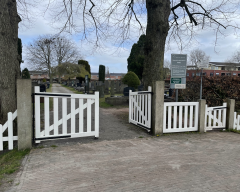
In February 1945 Feldmeijer was appointed commander of a battalion of Landstorm Nederland. While travelling to his position, his car was strafed by an Allied aircraft on 20 February 1945, and he was killed at age 34. He was buried a few days later at the Esserveld cemetery in Groningen. Himmler sent Rauter a telegram expressing regret at Feldmeijer’s death, calling him “the future of Holland” in SS eyes and noting that Mussert had never recognized what kind of man he had in him.
Feldmeijer remains one of the most radical and influential Dutch collaborators of the occupation years, remembered primarily for his leadership role in the Dutch SS and his involvement in political violence during the war.