The Victory Museum is part of the Museumplein Grootegast, where three museums share one location.
The occupation began on May 10, 1940, when Nazi Germany invaded the Netherlands, ushering in difficult times for many Dutch citizens. After the Allied landings in Normandy in June 1944, they pushed forward, eventually liberating South Netherlands following "Operation Market Garden." However, North Netherlands faced even harsher times, including the infamous "Hunger Winter" of 1944.
It wasn't until 1945 that the liberation of the rest of the Netherlands could begin, after the Germans were defeated in the Ardennes. American and British forces advanced towards Berlin to end the war, while Canadian units were tasked with liberating North Netherlands.
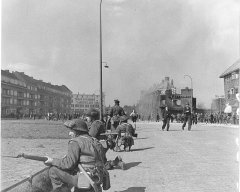
As the Canadians pursued, the retreating German occupiers used Groningen city as a last stronghold, resulting in the final major battle lasting about 4 days and causing significant damage to the city. Interestingly, the Martinitoren, under renovation at the time, was spared the destruction that befell the rest of the Grote Markt.
The Victory Museum showcases objects from Canadian, German, and resistance perspectives during this period. Dioramas vividly depict scenes from the war, such as a British airfield with an aircraft and an African setting.
Through its dioramas, the Victory Museum presents various aspects of World War II, including:
- The Liberation of North Netherlands by Canadians and Poles
- An RAF (Royal Air Force) airfield
- TAF (Tactical Air Force) engineers, a supporting branch for RAF operations
- German troops in the Netherlands
- Red Ball Express, the Allied supply route between Normandy and the moving front
- Logistical support by the US Navy
- Canadian field radio operations
- Africa, the battle in the Sahara
- And many other dioramas!
In addition to dioramas, the museum features display cases with various wartime objects, offering insights from both civilian and military perspectives.