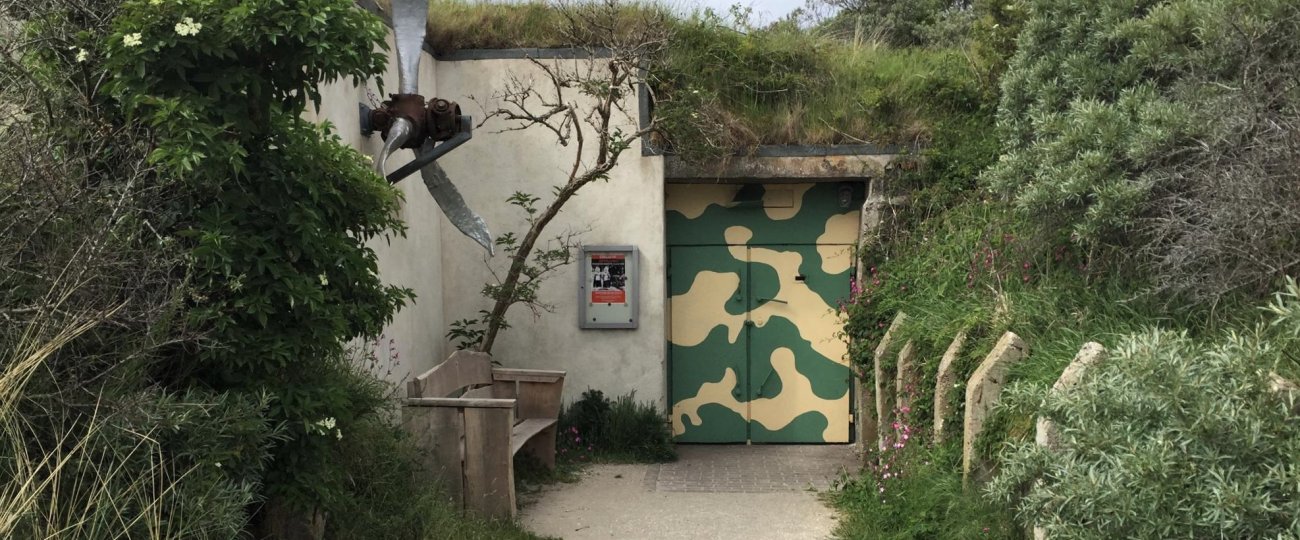
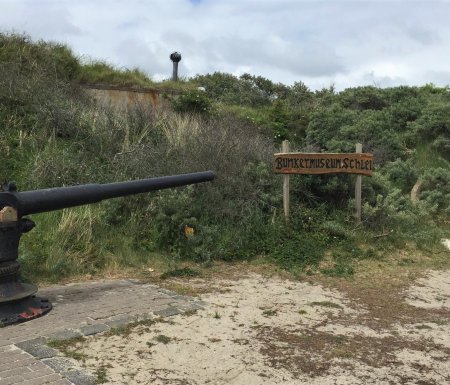
Often inconspicuously hidden in the landscape, the Dutch coast is still filled with bunkers from World War II. Sometimes buried in the sand or reclaimed by nature, they still tell the story of the German occupation. Visitors can also explore the bunkers on Schiermonnikoog.
Atlantic Wall
During the German occupation, the European coast literally turned into a fortress. Nazi Germany built a 6200-kilometer-long defensive line during World War II: the Atlantic Wall. Countless bunkers, tank barriers, and trenches, strategically placed, are still silent witnesses to this day. The construction of the Atlantic Wall had very profound consequences for residents in the coastal regions. This was also the case for Schiermonnikoog, where a small community of 600 inhabitants had to coexist with 600 German soldiers and 300 forced laborers. As the smallest Dutch Wadden Island, it held great significance for the Germans.
Bunker Day on Schiermonnikoog
During World War II, the Bunker Village Schlei was established, consisting of bunkers, radar installations, anti-aircraft guns, and camouflaged barracks. Some of these bunkers can be visited during Bunker Day. High on the dune stands the unique Wassermann bunker. The Seeburg bunker has been converted into a museum and served as a communication center during the war. Radar and radio signal data were collected here and transmitted to the Luftwaffe, which attempted to intercept spotted Allied aircraft with fighters. The generator bunker and an ammunition bunker (on the Westerhofpad) are also open for visits. In addition to visiting the bunkers and the museum, you can also participate in a guided tour through the Schlei Village.