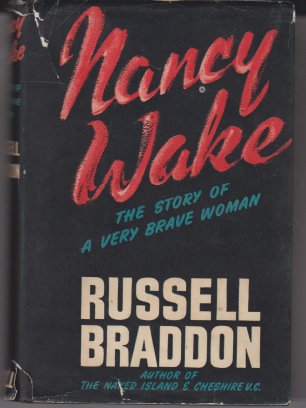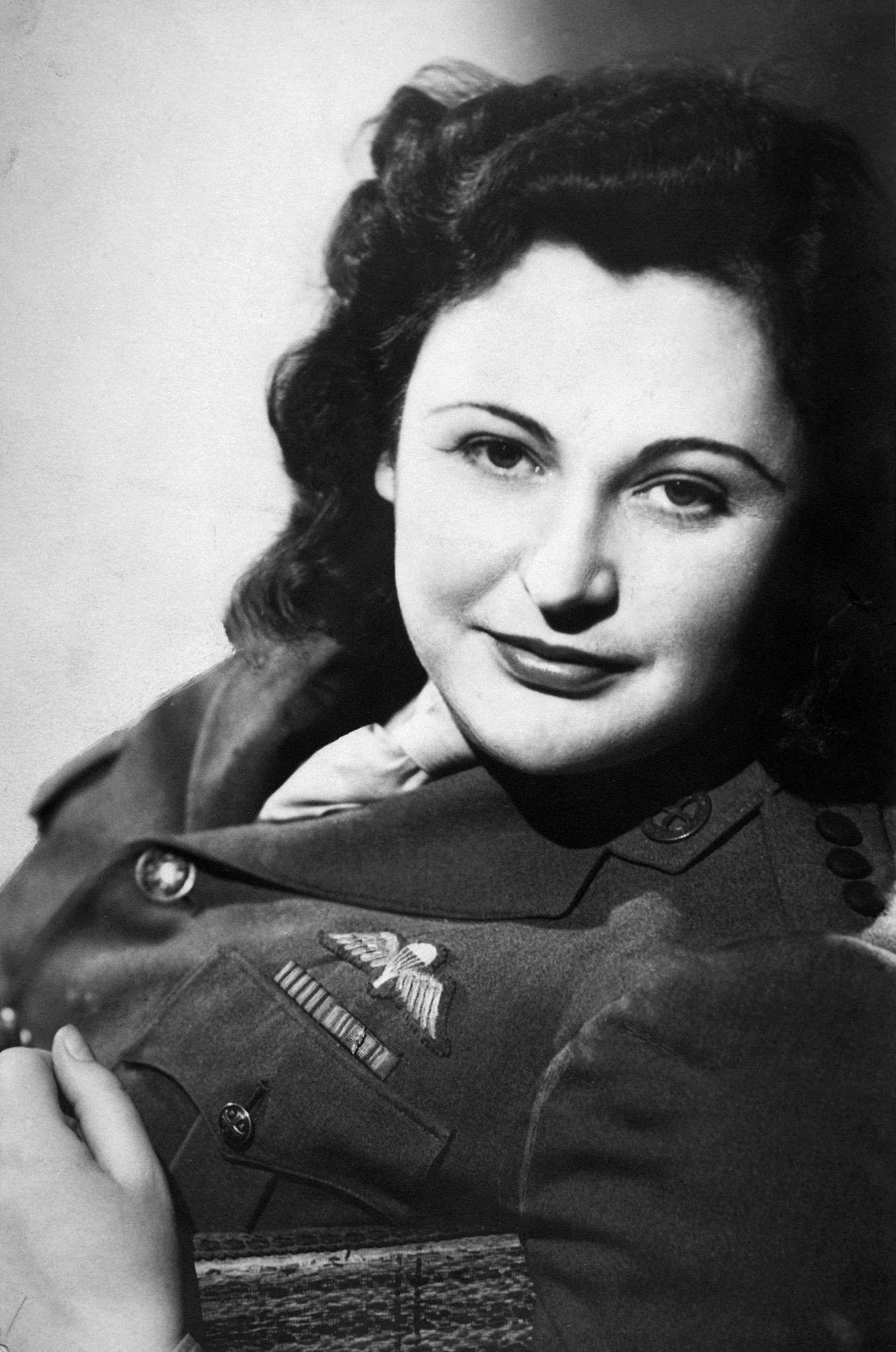
Nancy Grace Augusta Wake (1912–2011) was born in Wellington, New Zealand, and grew up in Sydney, Australia. She trained as a nurse and later worked as a journalist in Europe during the 1930s, where she witnessed the rise of fascism and Nazi persecution firsthand.
In 1939, she married Henri Fiocca, a wealthy French industrialist, and settled in Marseille. When France fell to Germany in 1940, Wake joined the French Resistance. She became a courier for the Pat O’Leary escape line, which helped downed Allied airmen and fugitives reach neutral Spain. Her skill in evading the Gestapo earned her the nickname “the White Mouse.”
By 1943, her activities had drawn German attention, forcing her to flee France through the Pyrenees. Her husband was later captured and executed by the Gestapo. After arriving in Britain, Wake joined the Special Operations Executive (SOE), a secret organization that supported resistance movements across occupied Europe. Under the code name “Hélène,” she was trained in weapons, fieldcraft, and communications.
In April 1944, she parachuted into central France as part of an SOE team known as “Freelance.” Their task was to coordinate between London and the local Maquis resistance groups in the Auvergne region. Wake helped organize supply drops of weapons and funds, distributed materials among the fighters, and took part in guerrilla actions against German forces.
She became known for her courage and resourcefulness. During one mission, after her team’s radio operator lost his equipment, she cycled more than 400 kilometers to deliver an urgent message to London—a story that became one of the best-known episodes of her wartime service. Wake later said she once killed a German sentry with her bare hands during a raid to prevent him from raising the alarm.
After the liberation of France, Wake returned to Britain. She received numerous awards for her wartime service, including the George Medal (UK), the Medal of Freedom (USA), the Croix de Guerre and Légion d’Honneur (France), and later the Companion of the Order of Australia and New Zealand’s RSA Badge in Gold.
In the years after the war, she worked briefly for British intelligence, then entered politics in Australia, standing twice as a Liberal Party candidate. She published her autobiography The White Mouse in 1985, which brought her international recognition.
In her later years, Wake lived between Australia and England, eventually settling in London. She died there in 2011 at the age of 98. Her ashes were scattered in central France, near Montluçon, where she had fought with the Resistance.
Today, Nancy Wake is remembered as one of the most decorated women of the Second World War and one of the most remarkable figures in the history of the Resistance.