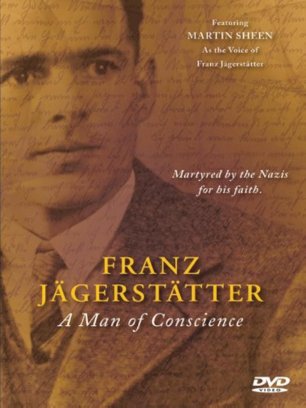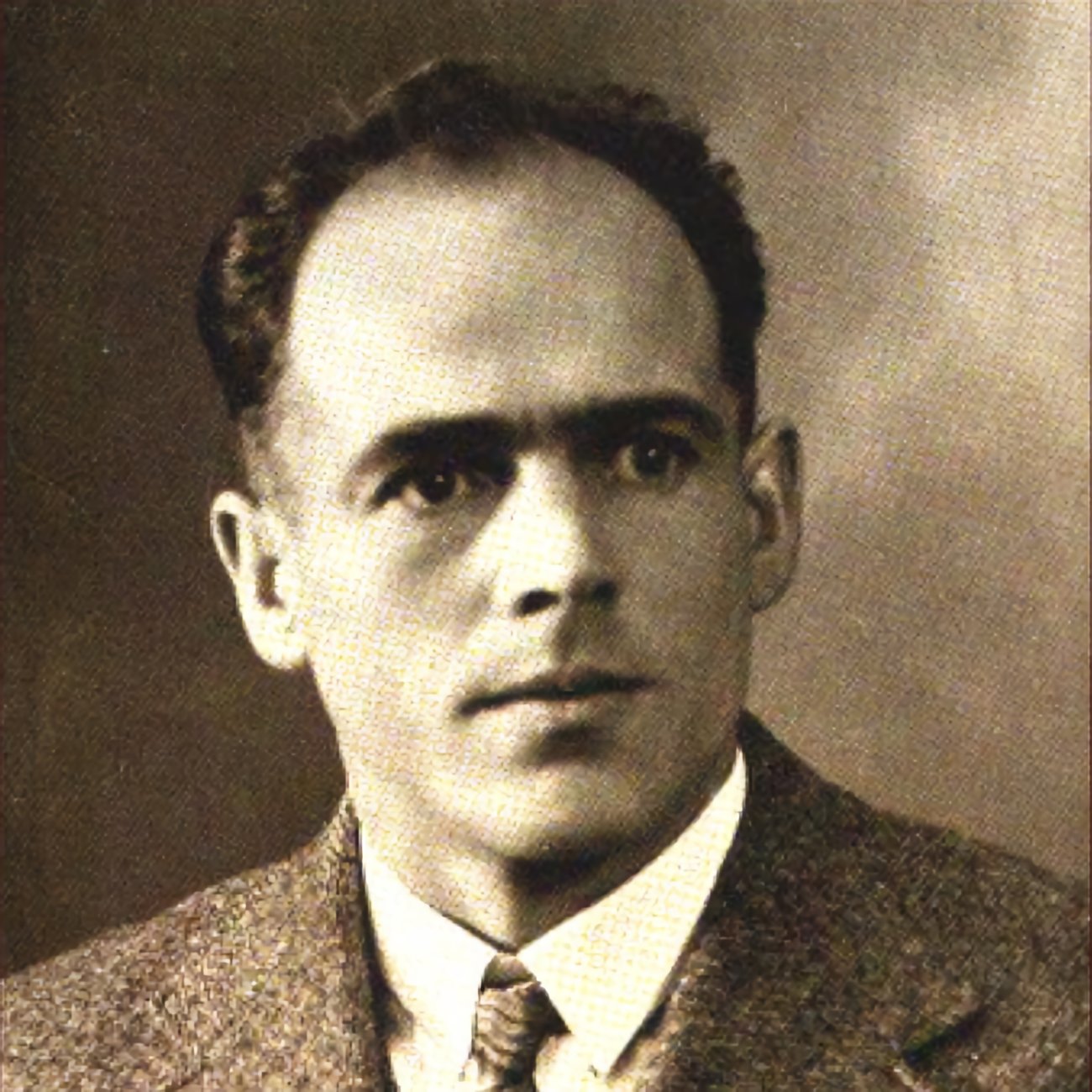
Franz Jägerstätter (often spelled Jaegerstaetter in English) was born Franz Huber on 20 May 1907 in the village of Sankt Radegund in Upper Austria. He was raised in a rural Catholic community and grew up on a small farm. His mother, Rosalia Huber, was unmarried at the time of his birth, and his biological father was killed during the First World War. In 1917, his mother married Heinrich Jägerstätter, who later adopted Franz and passed the family farm to him.
As a young man, Jägerstätter was known in his village as sociable and strong-willed rather than especially religious. He left school after the age of fourteen and worked as a farmer. He was interested in new things and was remembered as independent in character. During this period, he fathered an illegitimate daughter, whom he later supported financially. He also spent several years working in iron mines away from his home village, an experience that appears to have influenced his later outlook on life.
In the mid-1930s, Jägerstätter underwent a noticeable change in his beliefs and behaviour, becoming deeply religious. In 1936, he married Franziska Schwaninger, a woman who shared his strong Catholic faith. After their wedding, the couple travelled to Rome, where they received a blessing from Pope Pius XI. They later had three daughters together. Around this time, Jägerstätter became more active in church life and joined the Third Order of Saint Francis.
Following the German annexation of Austria in March 1938, Jägerstätter openly rejected National Socialism. He was the only person in his village known to have voted against the Anschluss in the official plebiscite. He refused offers of local political office and avoided any involvement with Nazi organizations. His stance caused isolation, as many fellow villagers, including Catholics, supported the regime.
Jägerstätter was drafted into the German Wehrmacht in 1940 and again later that year. During his military training, he refused to take the oath of loyalty to Adolf Hitler. He was temporarily released from service due to his role as a farmer and later worked as a sacristan at the local parish church. During this period, he became increasingly troubled by reports of Nazi crimes, including the persecution of the Church and the euthanasia program.
By 1943, Jägerstätter had concluded that participation in the war on behalf of Nazi Germany was morally unacceptable. He sought guidance from church authorities but received no clear support for his position. When he was called up again in February 1943, he formally declared his refusal to serve in the Wehrmacht, offering instead to perform non-violent duties. This offer was rejected, and he was arrested shortly afterward.
He was imprisoned first in Linz and later in Berlin, where he was charged with undermining military morale. During his imprisonment, he wrote letters explaining that he believed it was better to suffer personally than to participate in what he saw as an unjust war. On 6 July 1943, he was sentenced to death by a military court. Despite being given the opportunity to save his life by recanting his refusal, he remained firm in his decision.
Franz Jägerstätter was executed by guillotine on 9 August 1943 at Brandenburg-Görden Prison at the age of thirty-six. His remains were cremated, and after the war his ashes were returned to his home village and buried in the local cemetery.
After the war, Jägerstätter was widely criticized in Austria, especially by former soldiers, and his family faced social and financial difficulties. His actions remained largely unknown until the 1960s, when his story gained international attention through published biographies and later films. In 1997, his death sentence was formally overturned by a German court.
The Catholic Church later recognized Jägerstätter as a martyr. He was beatified in 2007, and he is commemorated for his refusal to serve a regime he believed was fundamentally incompatible with his faith. Today, he is remembered as one of the few Austrians who openly resisted Nazi military service on grounds of conscience during the Second World War.