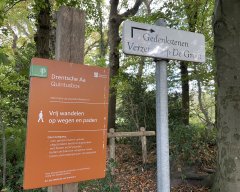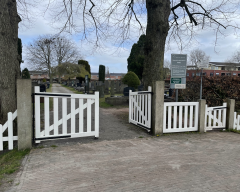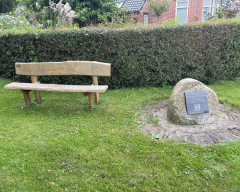
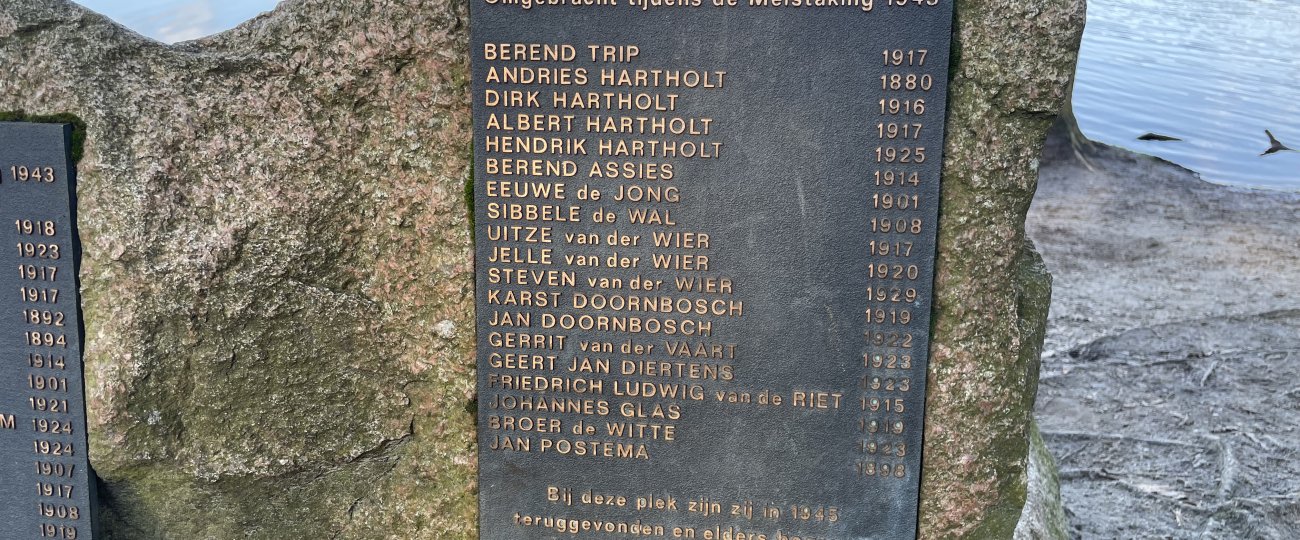
In the village of Glimmen, a monument stands in memory of 34 Dutch citizens who were killed by the occupying forces during the Second World War. These men and women were buried in the peatlands surrounding the village, victims of a brutal response to acts of resistance.
The tragedy began in 1943, when General F. Christiansen, the Wehrmacht commander in the Netherlands, announced that 300,000 Dutch soldiers would be taken into captivity. News of this decree spread rapidly, even before it appeared in the evening newspapers on April 29. That same afternoon, the Smit printing house in Hengelo had posted the announcement on its windows, allowing anyone passing by to read the dire news. In protest, a spontaneous strike broke out across the country, later remembered as the April–May Strike. The occupiers responded with extreme severity. With the approval of Dr. Seyss-Inquart, the Polizei-Standgericht was implemented. Workers were ordered to return to their jobs on Monday, May 3, 1943, and those who defied the order faced harsh punishment.
In the three northern provinces of the Netherlands, sixty people were executed in an attempt to crush the strike. To further intimidate the population, the bodies of 34 victims were taken to a secret location. Eyewitnesses later identified the site on the former military training grounds of De Appèlbergen, where nineteen bodies were recovered at the end of 1945. Over the following years, more remains were found, and families could finally begin the process of mourning and remembrance.
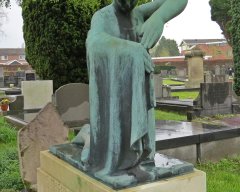
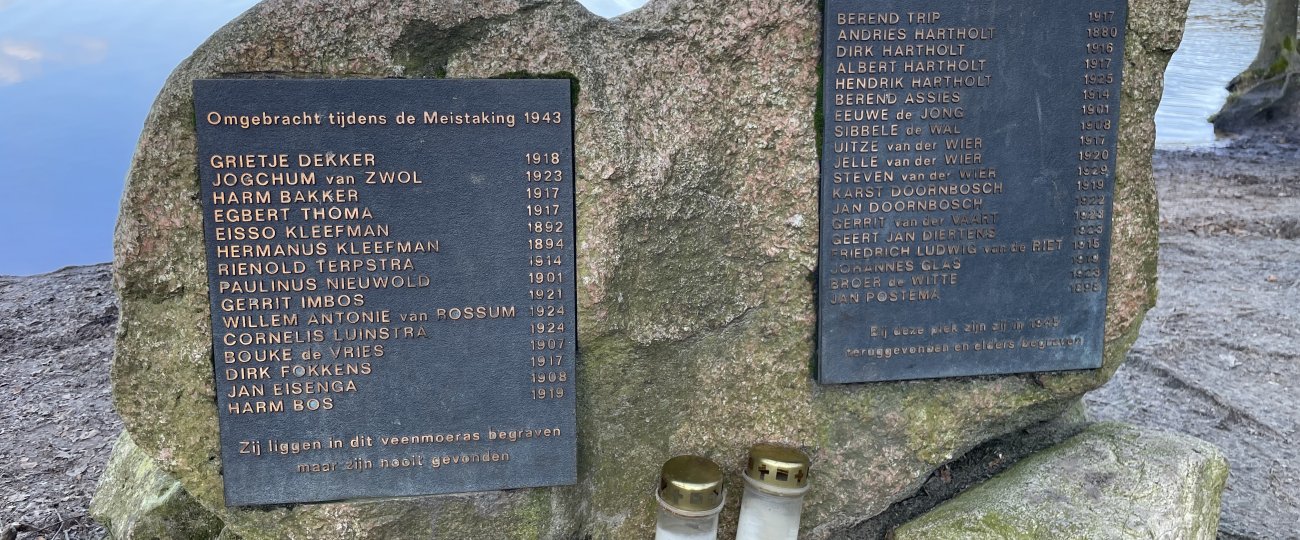
The Monument to the Victims of the May Strike of 1943 in Glimmen serves as a solemn tribute to these lives and as a reminder of the courage of ordinary Dutch citizens who resisted oppression. The monument features two plaques, each honoring the victims.
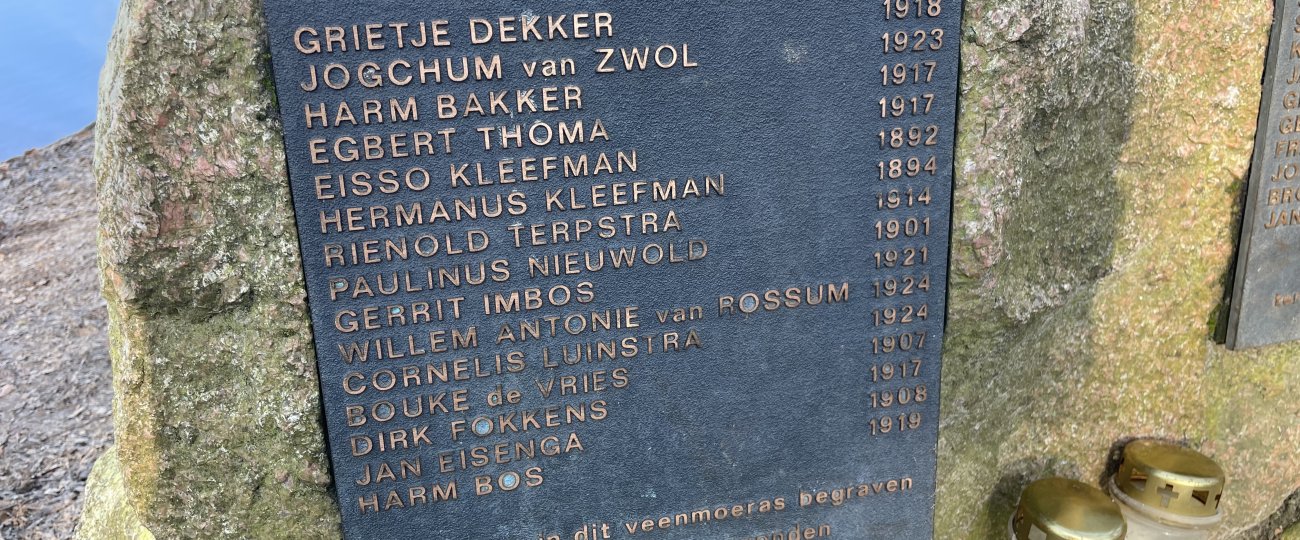
The left plaque reads:
“Killed during the May Strike of 1943
Grietje Dekker 1918
Jogchum van Zwol 1923
Harm Bakker 1917
Egbert Thoma 1917
Eisso Kleefman 1892
Hermanus Kleefman 1894
Rienold Terpstra 1914
Paulinus Nieuwold 1901
Gerrit Imbos 1921
Willem Antonie van Rossum 1924
Cornelis Luinstra 1924
Bouke de Vries 1907
Dirk Fokkens 1917
Jan Eisenga 1908
Harm Bos 1919
They lie buried in this peat marsh, but were never found.”
The right plaque reads:
“Killed during the May Strike of 1943
Berend Trip 1917
Andries Hartholt 1880
Dirk Hartholt 1916
Albert Hartholt 1917
Hendrik Hartholt 1925
Berend Assies 1914
Eeuwe de Jong 1901
Sibbele de Wal 1908
Uitze van der Wier 1917
Jelle van der Wier 1920
Steven van der Wier 1929
Karst Doornbosch 1919
Jan Doornbosch 1922
Gerrit van der Vaart 1923
Geert Jan Diertens 1923
Friedrich Ludwig van de Riet 1915
Johannes Glas 1919
Broer de Witte 1923
Jan Postema 1898
At this site, they were recovered in 1945 and reburied elsewhere.”
Today, the monument invites reflection and remembrance, preserving the memory of those who fell during one of the darkest chapters of the war. It stands as a lasting tribute to the bravery of ordinary citizens who resisted oppression and a reminder of the heavy cost of freedom.