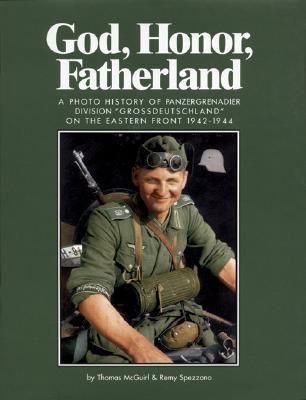
"Panzergrenadier Division 'Grossdeutschland'" stood as one of the most celebrated military formations in Germany during the Second World War. Established in 1942 through the expansion of Infantry Regiment (motorized) "Grossdeutschland," this division swiftly gained a reputation as the elite of the German Army on the Eastern Front. It differed from most other divisions by being twice the size, making it a powerful and formidable mechanized force capable of both offensive and defensive operations. Its meticulously chosen officer and non-commissioned officer corps ensured that, regardless of the odds, the division consistently performed exceptionally in battle, fostering a unique sense of unity and purpose, even compared to other divisions, including those in the Waffen-SS.
The soldiers who fought and died while serving in the Panzergrenadier Division "Grossdeutschland" represented a diverse cross-section of German society, a departure from the norm in the creation of German divisions during that era. For the first time, the faces of these men, in moments of rest and on the battlefield, come to life through a wealth of photographs collected from the division's war correspondents or Kriegsberichter.
This remarkable collection of photographs, long concealed in a European archive and recently uncovered and researched by authors Remy Spezzano and Thomas McGuirl, provides an unprecedented glimpse into the lives of these soldiers. With the invaluable assistance of the division's Veterans' association, they identified hundreds of individuals, both living and deceased, as well as numerous combat vehicles, equipment items, and specific battles the division participated in from April 1942 to September 1944. Accompanied by a detailed narrative that places each photo within the context of the Eastern Front, "God, Honor, Fatherland" is a groundbreaking work in the study of the Eastern Front during World War II, offering an intimate portrayal of the German soldier that was previously unseen.