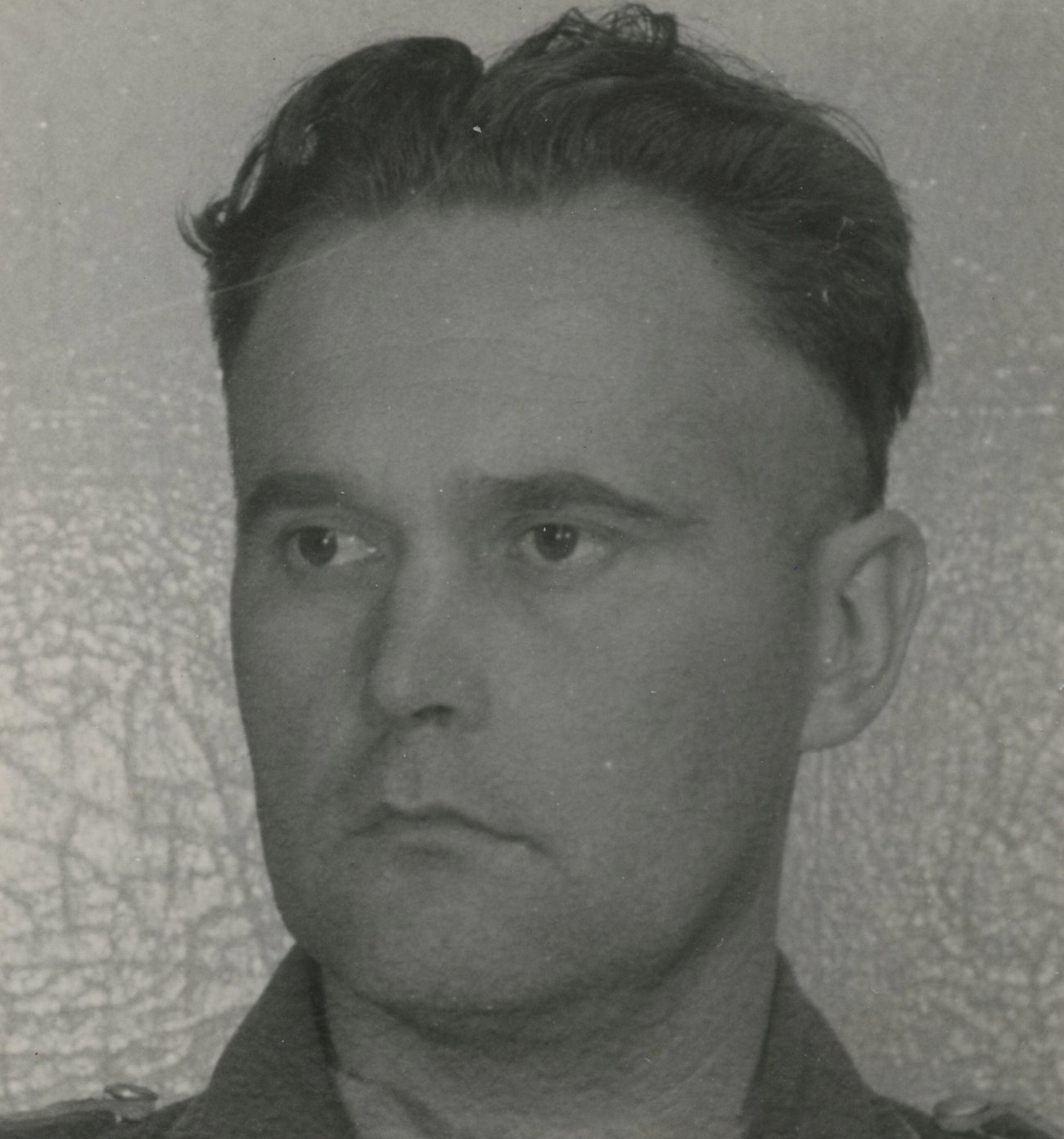
Bernard Georg Haase was a member of the German Sicherheitsdienst (SD), one of the Nazi police and intelligence organisations operating under Heinrich Himmler and the Reich Main Security Office (RSHA) in Berlin. During the German occupation of the Netherlands, Haase served as the commander of the Scholtenhuis in Groningen, a notorious German police headquarters associated with interrogation, imprisonment, and torture.
Haase was considered a highly educated officer and was often described as more restrained than some of his subordinates. Compared to figures such as his deputy Ernst Knorr, Robert Wilhelm Lehnhoff, and the executioner Peter Schaap, Haase was seen by contemporaries as less openly brutal. This relatively moderate attitude caused tension within the German police structure. Knorr and Lehnhoff reportedly viewed Haase as weak and unfit for his position, and at one point even fired shots through the window of his office in an attempt to undermine his authority and provoke hostility from the local population.
Despite being in command of the Scholtenhuis, Haase sometimes acted against the harsh expectations of his superiors. While he ignored the screams and suffering of detainees during interrogations, and prisoners were occasionally tortured to death under his command, there are also documented cases in which Haase ordered the release of suspects. He reportedly freed railway strikers and allowed residents of Groningen who were caught outside after curfew to return home with only a warning. Orders from higher authorities, including Arthur Seyss-Inquart, Hanns Albin Rauter, and officials in Berlin, increasingly demanded stricter and more violent measures, but Haase did not always comply.
As a result of his refusal to fully follow these orders, Haase was punished in 1945 by being transferred to the front. Even there, in the area around Lochem, he reportedly released prisoners instead of handing them over for execution or further detention.
After the war, Haase was arrested and put on trial in the Netherlands. During the proceedings, it was proven that he bore responsibility for at least 46 murders committed under his authority. His defense presented several statements in his favor and argued that Haase had released at least 36 people and may have saved their lives. Despite these arguments, the court found him guilty and sentenced him to death.
The death sentence was not carried out immediately. By 1951, Queen Juliana no longer wished to take responsibility for executions and delayed decisions on death penalties. The formation of a new government was postponed until a Minister of Justice, Leendert Antonie Donker, was appointed who supported granting clemency to the remaining condemned prisoners.
In January 1952, Haase’s death sentence was commuted to life imprisonment. In 1959, he was released from prison and returned to Germany. Bernard Georg Haase died on 9 September 1968 from a heart attack.