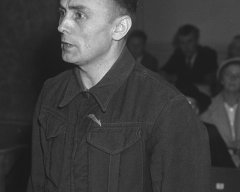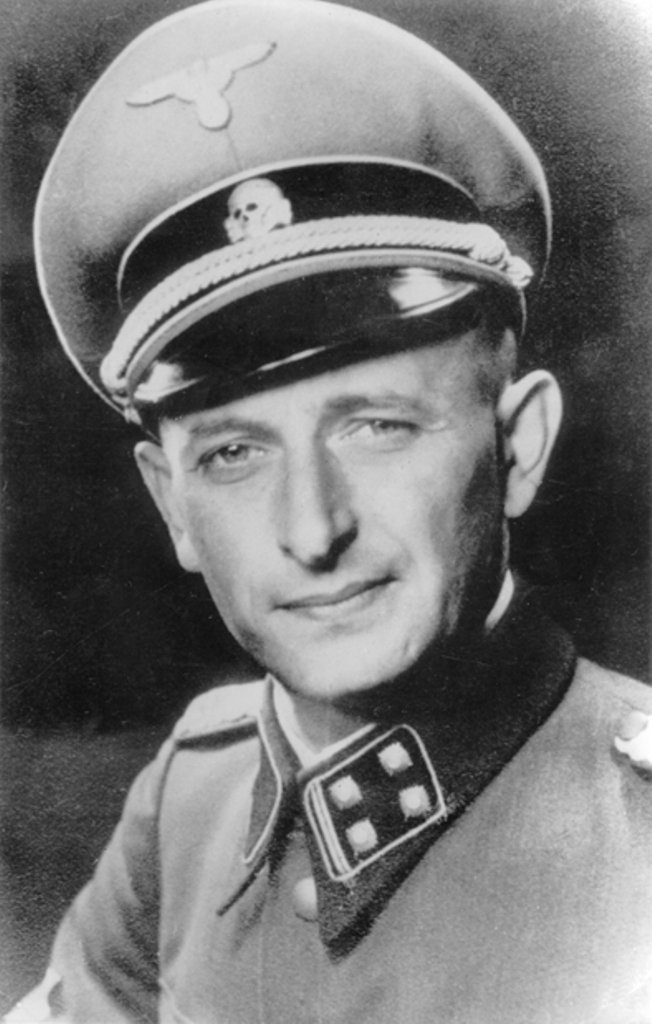
Adolf Eichmann was a high-ranking Nazi official and one of the key architects of the Holocaust. Born in 1906, he grew up in Austria and worked as a traveling salesman before joining the Nazi Party and the SS in the early 1930s. He quickly rose through the ranks of the Sicherheitsdienst (SD), the Nazi intelligence service, where he became responsible for Jewish affairs. Initially, his role focused on forced emigration, but as Nazi policies became more extreme, he shifted to organizing the mass deportation of Jews to ghettos and extermination camps.
In January 1942, Eichmann participated in the Wannsee Conference, where top Nazi officials formalized the “Final Solution” — the plan to systematically murder Europe’s Jewish population. He was tasked with coordinating the logistics of the genocide, ensuring millions of people were transported by train to death camps such as Auschwitz. He played a central role in the deportation of Hungarian Jews in 1944, which resulted in the deaths of over 400,000 people in just a few months.
After Germany’s defeat in 1945, Eichmann was captured by American forces but managed to escape. Using false documents, he fled to Argentina, where he lived under an assumed name for years. His whereabouts were eventually uncovered by Israel’s intelligence agency, Mossad. In 1960, agents captured him in Buenos Aires and smuggled him to Israel, where he stood trial for war crimes and crimes against humanity. His defense relied on the argument that he was simply following orders, but he was found guilty on all charges. In 1962, Eichmann was executed by hanging.
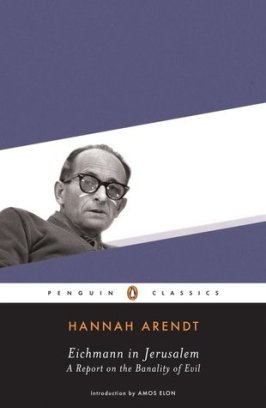
His trial was a major global event, bringing renewed attention to the Holocaust and the responsibility of individuals within totalitarian regimes. Philosopher Hannah Arendt covered the trial and famously described Eichmann’s actions as the “banality of evil” — portraying him not as a fanatical monster but as an ordinary bureaucrat who carried out mass murder without moral reflection. His case remains one of the most significant in the history of war crimes trials.